
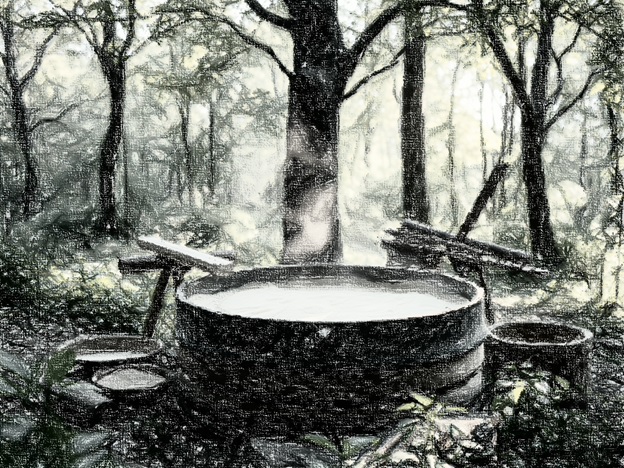
About 3 years ago, I wrote an article titled, How to Make a Living after the SHTF, where I outlined what I believe are the easiest ways to earn a living after the fall of civilization. Recently, I had the opportunity to visit a papermaking museum, which inspired me to consider how papermaking could be a marketable skill during a prolonged survival situation.
Paper has many uses. At home, you can write on it to document your daily struggles in the apocalyptic wasteland. It can be used by local governments for record-keeping, posting notices, and issuing special alerts. It can convey important messages between skilled professionals, traders, and government agencies. I suppose it can even be used as makeshift toilet paper!
So, how do you make paper using common weeds or tree debris?
You can technically make paper out of weeds like dandelions. However, since dandelions are edible, I don’t like the idea of taking fresh greens away from hungry families just to make paper.
Pine needles are also edible and rich in vitamin C, but consuming them in large amounts can cause gastrointestinal problems. Fortunately, pine needles are everywhere and drop from evergreen trees faster than anyone could possibly consume, which makes them a great material to work with. You can use both dry (brown) and fresh (green) needles to make paper, but the green needles will give the paper a pleasant pine scent. I consider a pleasant scent a great value-added upsell when trading paper for individual use.
Paper can be made using other materials and the method is pretty much the same. These plants are great alternatives: reeds, hemp, bamboo, mulberry, corn husk, hibiscus, nettle, and papyrus (of course). However, papyrus, specifically, is best used to create… papyrus. I will include instructions on how to make papyrus below, but the main difference is the pattern in which they are laid out before drying.
Pine Needle Paper
Use this ratio to calculate the amount of pine needles and water needed to make paper. This is a good ratio for other plant fibers.
- Dry pine needles (brown): 1 lb. per 2-3 gallon
- Fresh pine needles (green): 1 lb. per 3-4 gallon
- I’m using an old 40 gallon bathtub, so the recipe will be calculated for that size of a tub.
Ingredients & Materials
- Pine needles (Dry: 16 lbs. / Wet: 12 lbs.)
- Water
- Blender or food processor
- Large basin or tub (my bathtub is about 40 gallons)
- Paper frame (or make one using a screen and a wooden frame)
- Sponge or cloth
- Rolling pin or smooth bottle
- Towels or absorbent cloths
Directions
- Collect pine needles that have fallen onto the ground, or harvest fresh green needles from any branches within reach. If by some miraculous misfortune, there aren’t many pine needles on the ground, you may use a variety of plant materials. Just keep in mind that a mixture of plant materials may cause the paper to have different textures than expected[1]. Oh yeah. Also, note that if you use Poison Ivy or Oak, expect the poisonous properties to transfer onto your paper.
- Rinse the plant material to remove dirt, dust, and pollen. While rinsing, cut or tear the material into smaller pieces to make processing easier.
- Place the pine needles in a large basin or tub, and cover with water. Soak for several hours or overnight to soften the fibers.
- Optional: For fresh pine needles (and other tough fibers), boiling the plant fibers in water for about an hour can help break them down and make it easier to process in later steps. This will have to be done in batches since I am using a huge bathtub, which is fine because I’ll need to blend them in batches anyways.
- After soaking (and boiling if necessary), drain the pine needles and place in a blender or food processor. Add enough water to cover and blend until it has a pulpy, mushy consistency.
- If you don’t have a dedicated paper-making frame, you can make one using a window screen (I have a ton of these lying around) stretched over a wooden frame or a makeshift frame. Just make sure the screen is flat and allows water to drain from it.
- Fill a large basin or tub with water. Add the blended pulp to the water and mix it to evenly distribute the fibers.
- Submerge the frame into the vat of pulp and gently shake it side to side to evenly distribute the pulp on the screen. The amount of pulp you pick up will determine the thickness of the paper.
- Lift the frame out of the vat and let excess water drain. Place the frame on a flat surface, and use a sponge or cloth to gently press and absorb excess water from the pulp.
- Carefully lift the sheet of wet paper off the frame and place it on another towel or absorbent cloth. You can use a rolling pin or smooth (wine) bottle to press out more water and flatten the paper.
- Allow the paper to dry completely. This can take several hours to a day depending on thickness and humidity. You can speed up the drying process by placing it in a well-ventilated area or using a fan.
- Once dry, you can trim the edges to the size you need (8.5×11 inches is standard letter size).
- Optional: If you want a smoother finish, you can lightly press the dry paper with a warm iron or between two sheets of parchment paper.
Papyrus
Papyrus is made from the stalks of the papyrus plant, which are woven in a crisscross pattern to form a strong, flexible sheet. This material is typically more durable than ordinary paper. However, since it comes from a specific plant that may not be readily available in many areas, making papyrus is likely not a practical marketable skill after the SHTF.
I’m including a general guide on how to make papyrus because something similar can be made using reeds, hemp, and bamboo. Plus, the process is pretty much the same.
Ingredients & Materials
- Papyrus plant stalks or similar reed-like plants
- Knife
- Hammer or mallet
- Water
- Large basin
- A press or heavy object
Directions
- Harvest papyrus stalks or similar reed-like plants, and cut them into sections.
- Remove the outer layer and slice the inner pith into thin, consistent strips.
- Soak the strips in water to soften them for about 24 hours.
- Lay the strips in a crisscross pattern on a flat surface, overlapping them to form a mat.
- Place a heavy object or use a rolling pin (or bottle) to compress the layers and bond them together. This also helps remove excess water.
- Allow the mat to dry completely in a well-ventilated area. This can take more than one day depending on humidity.
***
These are the methods a survivalist can use to make paper and papyrus. In my next article, I’ll explain how to make ink using materials that can be foraged in most woodland regions of the USA.
[1] Caution Regarding Mixing Plant Materials: If you’re using a mix of plant materials, be aware that you might accidentally include poison ivy or poison oak if you aren’t paying attention. These plants can transfer their harmful properties to your paper. Even a small amount can cause allergic reactions during and after the papermaking process, as urushiol oil can infuse into the paper. Therefore, please exercise caution when mixing plant materials.
 Edwords wOrcs
Pingback: Making Ink after the SHTF – Edwords wOrcs